We now have good examples of the genetic basis of adaptation for many simple traits. However, most evolutionary change involves complex traits, and our understanding of their evolution remains rudimentary. This symposium will promote a broad, synthetic discussion of adaptive evolution for complex traits, bringing together theoreticians and empiricists working on diverse organisms
Introduction: Michael Nachman, President AGA
Keynote Speaker: 2026 Guggenheim Fellow Rasmus Nielsen, U California, Berkeley
Invited Speakers & Abstracts
Rachael Bay, UC Davis
Graham Coop, UC Davis
Jeff Good, University of Montana
Thomas Juenger, University of Texas
Joanna Kelley, UC Santa Cruz
John Kelly, University of Kansas
Sarah Kocher, UC Berkeley
Julia Kreiner, University of Chicago
Katie Lotterhos, Northeastern University
Bret Payseur, University of Wisconsin
Dmitri Petrov, Stanford University
Paul Schmidt, University of Pennsylvania
Molly Schumer, Stanford University
Guy Sella, Columbia University
Jenny Tung, Max Planck Institute Leipzig
Trisha Wittkopp, University of Michigan
Samuel Yeaman, University of Calgary
Jianzhi Zhang, University of Michigan
PROGRAM
Polygenic Adaptation in a Changing World
Granlibakken Tahoe
Sunday 4 October
4:30 Registration - Mountain Deck
4:30-6:00 Welcome reception
6:00 pm Dinner – Granhall
All talks will take place in the Mountain Ballroom
7:00 pm Introduction, Michael Nachman, President AGA
7:20 pm AGA Keynote Lecture, Rasmus Nielsen
Detecting positive selection on quantitative traits using explicit population genetic models
Monday 5 October
7:30 am Breakfast buffet – Granhall
Morning session moderator: Jeff Good
9:00 am Guy Sella
When should adaptation arise from a polygenic response versus few, large effect changes?
9:25 am Sam Yeaman
The genetic basis of adaptation: constrained, flexible, or somewhere in between?
9:50 am Graham Coop
The genome-wide effect of drift and selection over a single generation
10:15 am Break
10:45 am Tom Juenger
A generalist–specialist trade-off between switchgrass cytotypes impacts climate adaptation and geographic range
11:10 am John Kelly
Predicting polygenic fluctuating selection in Mimulus guttatus
11:35 am Julia Kreiner
The tempo and architecture(s) of rapid adaptation
12:00 pm Lunch buffet - Mountain Deck/Granhall
Afternoon session moderator: Sarah Kocher
1:30 pm Sylvia Durkin
The genetic and environmental basis of Allen’s rule
1:50 pm Andrew Clark
Polygenic fitness components reveal antagonistic pleiotropy and sexual conflict in the Florida Scrub-Jay
2:10 pm Scott Taylor
Evidence of selection on spatial memory in mountain chickadees (Poecile gambeli)
2:30 pm Break
3:00 pm Katie Lotterhos
A quantitative genetic model of thermal performance curve evolution captures observed adaptive tracking in real time series
3:25 pm Paul Schmidt
Polygenic adaptation in seasonally fluctuating environments
3:50 pm Dmitri Petrov
Common, consequential, and actively maintained: the neo-balance view of genetic variation
4:15 pm Panel Discussion: What have we learned and where are we going?
Moderator: Michael Nachman
Panelists: Graham Coop, Tom Juenger, Sylvia Durkin, Andy Clark, Katie Lotterhos
5:00 pm Happy hour
6:00 pm Dinner buffet – Granhall
7:00 pm Poster session
Tuesday 6 October
7:30 am Breakfast buffet – Granhall
Morning session moderator: Julia Kreiner
9:00 am Jeff Good
Adaptation across an extreme elevational gradient in the world’s highest dwelling mammal
9:25 am Joanna Kelley
Many roads to Rome: convergent adaptation to hydrogen sulfide through diverse genetic mechanisms
9:50 am Molly Schumer
Varied genetic mechanisms drive pigmentation variation and melanoma in swordtail fish
10:15 am Break
10:45 am Bret Payseur
Genetics of the island rule
11:10 am Sarah Kocher
Cryptic chemical and genomic differentiation associated with social flexibility in the sweat bee, Megalopta genalis
11:35 am Rachel Bay
Parallel polygenic adaptation in marine systems
12:00 pm Lunch buffet - Mountain Deck/Granhall
Afternoon session moderator: Dmitri Petrov
1:30 pm Madison Armstrong
The role of genotypic redundancy in adaptation to environmental variation
1:50 pm Anne Beulke
Supergene to single loci: divergent genetic architectures of two correlated traits in steelhead trout
2:10 pm Xing Wu
Rapid adaptation and extinction in synchronized outdoor evolution experiments of Arabidopsis thaliana
2:30 pm Break
3:00 pm Jianzhi Zhang
Environmental fluctuation reconciles experimental and natural molecular evolution
3:25 pm Patricia Wittkopp
Arrival and survival of the fittest: genetic variation affecting gene expression
3:50 pm Jenny Tung
Insights into genetic evolution from long-term field studies of social mammals
4:15 pm Panel Discussion: What have we learned and where are we going?
Moderator: Michael Nachman
Panelists: Molly Schumer, Bret Payseur, Anne Beulke, Trisha Wittkopp, Jenny Tung
5:00 pm Happy hour
7:00 pm Dinner buffet – Granhall
8:00 pm Bill Murphy, Editor-in-Chief, Journal of Heredity
Introduction and presentation of awards for best student papers
Miranda Wade (2025 Best Student Paper)
Microplastic exposure is associated with epigenomic effects in the model organism Pimephales promelas (fathead minnow)
James Alfieri (2024 Best Student Paper)
Domestication is associated with increased interspecific hybrid compatibility in landfowl (order: Galliformes)
Wednesday 7 October
7:30 am Breakfast buffet - Granhall
Departures
2026 EECG Awardees
Kevin Bennett
Savanna Brown
Isabelle Danforth
Vinay Laxminarayan
Alexander Lewanski
Ronen Liberman
Ellen Sharkey
David Tian
Wyatt Touré
April Wallace
2026 SEA Awardees
Allendorf: Conservation Genomics Workshop; University of Antananarivo, Madagascar
Coughlan: Trends in Biodiversity and Evolution: the Evolutionary Role of Structural Genomic Variation. Vila do Conde, Portugal
Eizirik: ConGen Global 2026, Vale Natural Reserve, Linhares, ES, Brazil
Wilder: Connecting Genomics to People, Culture, and Place (CGPCaP), Hawai’i (multiple locations)
Wilder: Ontario Ecology, Ethology, and Evolution Colloquium (OE3C) 2026, Brock University, St. Cathatines, Ontario, Canada
Yeager: Introduction to Conservation Genetics Workshop, Hood College, Frederick, MD.
Graham: University of Kansas Center for Genomics 5th Annual Research Symposium Friday, Lawrence, KS
Colalocovo: EMBO Meiosis Workshop. Sant Feliu de Guixols, Spain
Special Event Awards, Ecological, Evolutionary, and Conservation Genomics Research Awards, and the Researcher Community Engagement Awards
The American Genetic Association grants awards each year to it's members for support of special events that advance the mission of AGA, particularly to support students to attend the event.
Eligible events include specialized workshops and short courses in topical areas of organismal genetics and genomics, but any event relevant to AGA's purpose will be considered. Events that could lead to Journal of Heredity articles will receive special consideration.
Awards are between $1,000-$10,000. Funding is competitive, and applications must follow the guidelines.
Ecological, Evolutionary, and Conservation Genomics Research Awards
The American Genetic Association grants EECG Research Awards to graduate and post-doctoral researchers who are at a critical point in their research, where additional funds would allow them to conclude their research project and prepare it for publication.
These awards are open to any graduate student or postdoctoral fellow who is a member of the American Genetic Association at the time of application.
Awards are for up to $6,000.
Researcher Community Engagement Awards
The Award for Researcher Community Engagem,ent is a pilot program from the AGA to support the relational work that enables responsible science and development of trust in the broader scientific enterprise. Funding covers activities that strengthenn trust, foster communication, and encourage more co-created understanding between researchers and local (defined as rural and under-resourced urban communities) and / or Indigenous communities.
Applicants may request up to $2000
Humane Genomics Education Award
The Award for Humane Genomics Education is a pilot program from the AGA to support educational activities and initiatives that improve genetics education and promote 'Humane Genomics'. 'Humane genomics education' is an approach to teaching modern genetics and genome science that improves understanding of genetics, decreases students' acceptance of non-scientific notions of genetic essentialism, and reduces racial bias by dismantling persistent misconceptions about race and genetics. As developed and described by Donovan et al (2024), humane genomics education focuses on teaching the complexity of human genomics that is not captured by a basic introduction to Mendelian genetics. This approach focuses on describing the distribution of genetic variation within and between populations and the multifactorial basis of complex human traits, including polygenic inheritance and genotype by environment interactions. Integrating these principles provides a comprehensive understanding of human diversity that directly counters the deterministic narrative that human traits and social identities are fixed, inevitable products of our DNA.
It is our vision to harness the power of genomics to understand and conserve the diversity of life
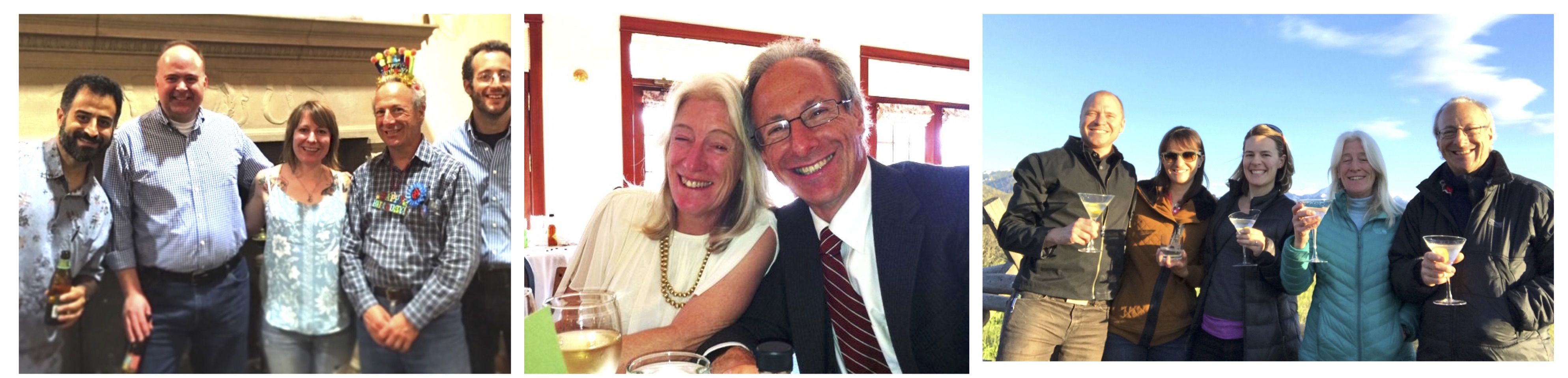
The American Genetic Association has established the Robert K. Wayne Conservation Scholarship and Research Fund to support graduate students whose research directly benefits a threatened species. The first $6000 scholarship was awarded to Kyle Jaynes in 2023. We welcome donations from members of our community who wish to grow the impact of this Fund in Bob’s honor.

AGA2026: Polygentic Adaptation in a Changing World - President Michael Nachman
AGA2024: Genomic Technologies and the Future of Conservation - President Beth Shapiro
AGA2022: Selfish Evolution: Mechanisms & Consequences of Genomic Conflict - President Lila Fishman
AGA2021: Conservation Genomics, Current Applications & Future Directions - President Kelly Zamudio
AGA2020: Genes as Environment - President Kimberly Hughes
AGA2019: Sex and Asex - President Maria Orive
AGA2018: Origins of Adaptive Radiation - President Rosemary Gillespie
AGA2017: Evolutionary Quantitative Genetics in the Wild - President Anne Bronikowski
AGA2016: Local Adaptation - President Lynda Delph
AGA2015: Chromosome Evolution - President Katie Peichel
AGA2014: Evolution and Plasticity - President Robin Waples
AGA2013: Speciation Continuum - President Kerry Shaw
The AGA's EECG Research Awards provide funds to support the final stages of genomic research projects for grad students and postdocs.
 The AGA grants awards to its members for support of special events that advance its mission, particularly to enable students to attend the event.
The Outstanding Student Paper Award for the best student paper published in AGA's Journal of Heredity includes a cash prize of $2,000.
10 + 1 Awards!
 “Ancestry testing of “Old Tom,” a killer whale central to mutualistic interactions with human whalers”
 Four events funded this year
 Learn about how Oliver Ryder and his team at the San Diego Zoo Wildlife Alliance made the incredible discovery of condor parthenogenesis. Research article in the December 2021 issue of Journal of Heredity.
 Boldly visualized by Brian Bowen with an Orlog metaphor, wherein the actions of the past and present influence future outcomes. FREE online
 Read the JHered article for free at https://doi.org/10.1093/jhered/esz058
 Read the JHered article by Krysko et al. FOR FREE https://doi.org/10.1093/jhered/esw086
FORT LAUDERDALE-DAVIE, Fla. – Pop Quiz: what creatures make up more than 70% of the approximately 1.9 million described species on earth and have long served as model organisms in many areas of biology? If you guessed invertebrates, you’re right!


Check out our Editor's Choice article by Bergman, et al., where the authors assess the power of genimics to inform ESUs, while our cover this issue is courtesy of Boven et al., who examine the critical issue of Kokanee-sockeye salmon hybridization and the effect it has on salmon migration.
Apply now for an AGA
Any questions? Contact the Managing Editor at theaga@theaga.org.