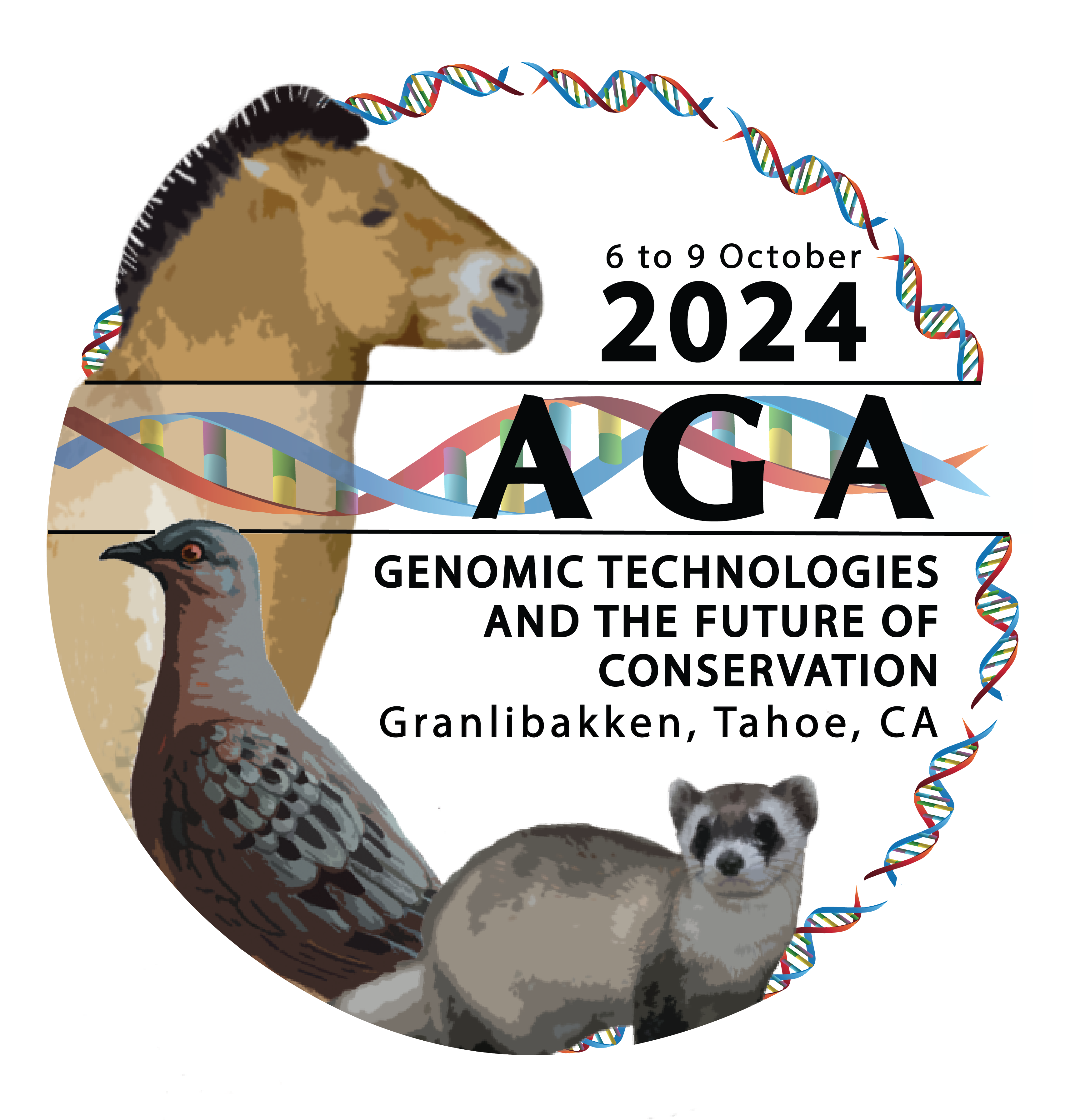
October 6-9, 2024 at Granlibakken Tahoe, California
The theme across talks will be to explore DNA and other biotechnologies,
including cloning and de-extinction, for biodiversity conservation.
We would like to welcome Michael Nachman, President Elect, to the AGA Council.
Joining him as new Councilors for 2024 are Melanie Culver, Oliver Ryder, and Chris Funk
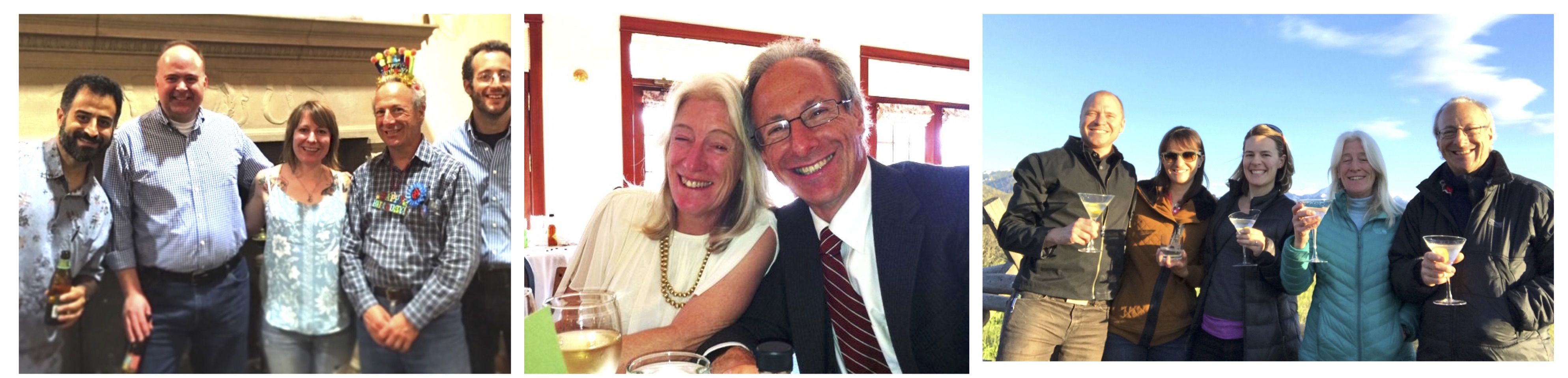
The American Genetic Association has established the Robert K. Wayne Conservation Scholarship and Research Fund to support graduate students whose research directly benefits a threatened species. The first $6000 scholarship was awarded to Kyle Jaynes in 2023. We welcome donations from members of our community who wish to grow the impact of this Fund in Bob’s honor.
AGA2020: Genes as Environment - President Kimberly Hughes
AGA2019: Sex and Asex - President Maria Orive
AGA2018: Origins of Adaptive Radiation - President Rosemary Gillespie
AGA2017: Evolutionary Quantitative Genetics in the Wild - President Anne Bronikowski
AGA2016: Local Adaptation - President Lynda Delph
AGA2015: Chromosome Evolution - President Katie Peichel
AGA2014: Evolution and Plasticity - President Robin Waples
AGA2013: Speciation Continuum - President Kerry Shaw
We are committed to accomplishing this mission together with the most inclusive group of members and contributors possible, unrestricted by race, gender, sexuality, religion, political affiliation, or background. We have worked and will continue to work to broaden participation in this field to reflect the diversity of our broader community. We adamantly oppose any forms of discrimination, and we enthusiastically support the dissemination of peer-reviewed scientific research results to other scientists and the public at large.
The AGA's EECG Research Awards provide funds to support the final stages of genomic research projects for grad students and postdocs.
 The AGA grants awards to its members for support of special events that advance its mission, particularly to enable students to attend the event.
The Outstanding Student Paper Award for the best student paper published in AGA's Journal of Heredity includes a cash prize of $2,000.
10 + 1 Awards!
 “Ancestry testing of “Old Tom,” a killer whale central to mutualistic interactions with human whalers”
 Four events funded this year
 Six PhD students and four postdocs receive funding.
 Two US workshops and one student-led Canadian conference received funding
 Alison Miller wins award for best student-authored paper in the 2022 volume of Journal of Heredity
 Learn about how Oliver Ryder and his team at the San Diego Zoo Wildlife Alliance made the incredible discovery of condor parthenogenesis. Research article in the December 2021 issue of Journal of Heredity.
 Boldly visualized by Brian Bowen with an Orlog metaphor, wherein the actions of the past and present influence future outcomes. FREE online
 Read the JHered article for free at https://doi.org/10.1093/jhered/esz058
 Read the JHered article by Krysko et al. FOR FREE https://doi.org/10.1093/jhered/esw086
FORT LAUDERDALE-DAVIE, Fla. – Pop Quiz: what creatures make up more than 70% of the approximately 1.9 million described species on earth and have long served as model organisms in many areas of biology? If you guessed invertebrates, you’re right!

Apply now for an AGA
Any questions? Contact the Managing Editor at theaga@theaga.org.